Your Cart is Empty


A business can be good and still not be investable.
I think this distinction gets missed a lot when entrepreneurs start raising capital.
You know the business better than anyone. You see the product, the opportunity and everything it could become. But an investor is looking at it through a different lens.
They are asking whether the opportunity makes sense as an investment.
That means the business has to do more than exist. The case for putting capital into it has to make sense.
A business exists to solve a problem, serve a customer and create value. An investment has another layer. Somebody is putting capital at risk today because they believe the value of what they own can increase in the future.
So when I look at a company preparing to raise, I want to understand both sides.
What is the business?
And what exactly is the investment opportunity?
The stronger those two things fit together, the easier it becomes to make the case.
Before worrying about the financing, I want to know whether management can explain how the business actually works.
Who is the customer? What problem are you solving? How big could the audience become? What makes the product or company different? What is defensible? Who is running it? What are the important KPIs? How does the company intend to turn the idea into something real?
A fundamentally sound business plan is useful because it forces you to think through those questions. It doesn’t have to predict the future perfectly. Businesses evolve. But if you can’t explain how you intend to bring the idea to life, it becomes difficult to expect an investor to believe you can do it either.
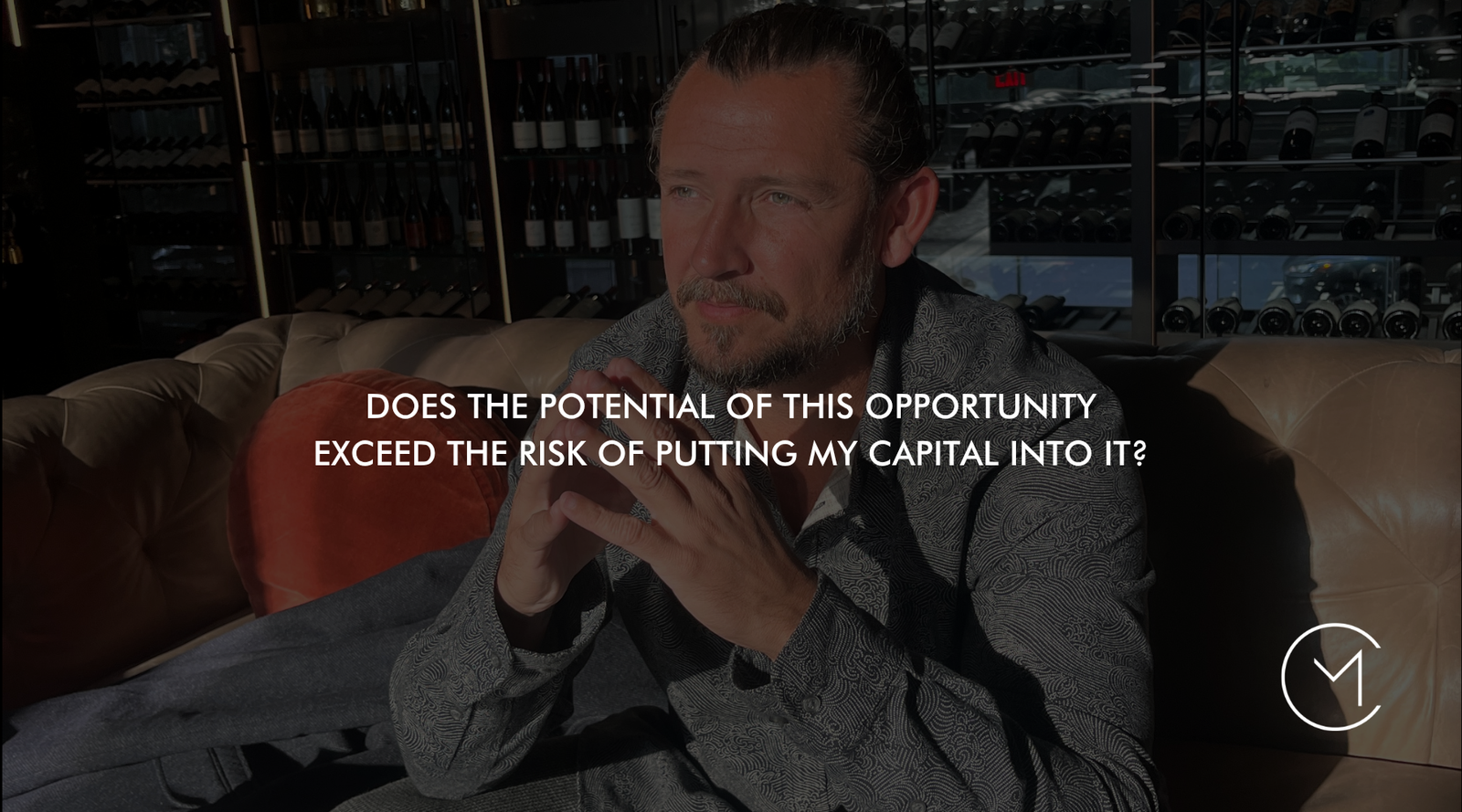
Investors are evaluating potential and risk at the same time.
They want to understand what could happen if the business works, but also what has to go right for that outcome to happen.
That’s where audience and market size matter. A strong product serving a meaningful need in a sufficiently large market can help an investor see how the business might grow. The valuation and financing terms then determine what they are being asked to pay today for a piece of that potential.
This is part of making the case for the business.
People put enormous pressure on the pitch deck. I understand why. It is often the first thing an investor asks for.
But the deck can’t manufacture an investment opportunity that isn’t there.
I see the pitch deck as the first digestible touch point. It should communicate the mission, problem, solution, differentiation, market, team, ownership, use of proceeds, milestones and relevant performance data succinctly. In many cases, 12 to 15 good slides can do the job.
Substance first. Then tighten the language, put it on brand and make it look great.
If the underlying opportunity is compelling, the deck helps somebody see it quickly. If the underlying opportunity is weak or unclear, prettier slides won’t solve the problem.
There isn’t one universal formula, but I generally want to see a combination of things working together: a clear market position, a real problem, a credible solution, a meaningful audience, capable people, a sensible plan, understandable economics or KPIs, a clean ownership structure, a professional presentation and a financing that makes sense relative to the opportunity.
The company doesn’t need to be perfect. Early-stage businesses almost never are.
It does need to give an investor enough clarity to understand what they are financing and why the potential return may justify the risk.
A company can be attractive and still propose a bad financing.
Price matters. Valuation matters. Terms matter. Dilution matters. Use of proceeds matters. The amount being raised matters.
The question isn’t simply, “How much money can we get?”
It’s what capital does the business actually need, what will that capital allow the company to accomplish, and what are investors receiving in return for taking the risk?
The right financing should help the company reach a meaningful next stage while still making sense to the people being asked to participate.
I also don’t think all money is equal.
If I can bring sophisticated investors into a company who understand the space, have useful relationships, can provide perspective and may participate again later, that can be more valuable than simply filling the round with whoever says yes first.
You’re building an ownership structure and, ideally, a financial network around the business.
That deserves thought.
If you stripped away your emotional attachment to the company and somebody brought the exact opportunity to you today, would you invest?
At this valuation?
On these terms?
With this management team?
For this use of proceeds?
Against these risks?
With this potential upside?
If the answer isn’t obvious, figure out why.
That answer may tell you what needs to change before you go to market.
The best capital raises don’t begin with a clever pitch.
They begin with something worth financing, then make the investment case around it clear.
That’s the difference I want entrepreneurs to understand.
A good business gives you something to work with.
An investable business gives capital a reason to participate.
For the broader framework, read How to Raise Capital for Your Business: The Complete Process and Is Your Business Actually Ready to Raise Capital?.
If you want to work through the full process in more depth, my Raising Capital for Business course walks through the process in 23 videos, one introduction and 22 modules, with a complete workbook and practical resources.
This article is part of my Raising Capital authority series. Continue with Capital Markets hub, How Small-Cap Public Companies Raise Capital, Why Many Capital Raises Fail Before the First Investor Meeting and How to Approach Investors: Outreach, Introductions & Follow-Up.
This article is for informational and educational purposes only and is not financial, legal, investment, tax or securities advice. Raising capital and issuing securities are regulated activities. Always conduct your own due diligence and consult appropriately qualified professionals regarding your specific circumstances and jurisdiction.

Comments will be approved before showing up.